
Skip to content

Inline Mixers for Continuous Manufacturing & Process Integration

Inline Mixing Overview

Inline mixing is a flexible, high-performance approach to industrial mixing that applies controlled energy directly within a process line rather than inside a vessel. By installing an inline mixer into a recirculation loop or transfer pipeline, manufacturers can enhance dispersion, emulsification, powder induction, or particle reduction without modifying existing tanks or reconfiguring their current mixing setup.

Because inline mixers operate independently of vessel geometry and batch size, they are especially well suited for continuous manufacturing, semi-continuous processing, and batch recirculation. Inline mixing allows processes to remain exactly as they are—while adding targeted mixing intensity precisely where it is needed.

Inline Mixing Equipment Options

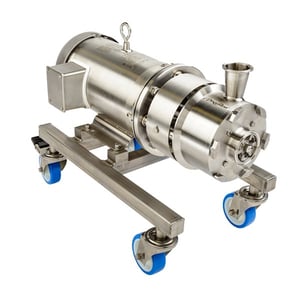
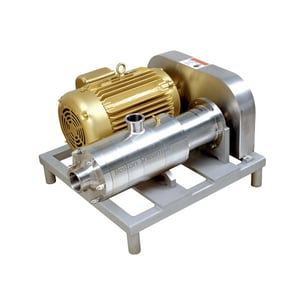
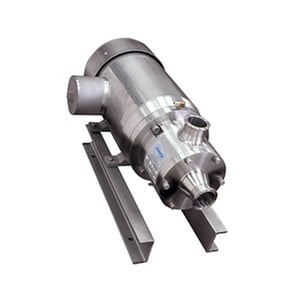
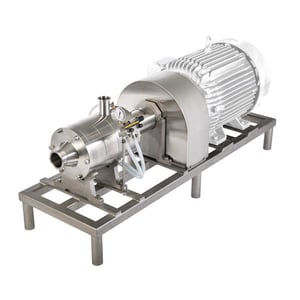
Inline mixing solutions are available in multiple configurations to support a wide range of process requirements, flow rates, and installation preferences. Whether the goal is continuous manufacturing, batch recirculation, powder induction, or targeted process intensification, inline mixers can be selected to match both performance needs and application environment.

Use the filters below to explore inline mixing equipment designed for hygienic or chemical processes and identify solutions that integrate seamlessly into your existing system.

INTRODUCTION

What is inline mixing?

Inline mixing is the process of applying mechanical mixing energy directly within a pipeline rather than inside a tank. Product flows continuously through the mixer, where it is subjected to controlled shear, turbulence, and hydraulic forces before returning to the vessel or moving downstream to the next process step.

This configuration allows inline mixers to deliver consistent, repeatable results regardless of batch size, making them ideal for processes that require precision, scalability, or continuous operation.

Inline mixing and continuous manufacturing

Inline mixers are naturally aligned with continuous manufacturing, where material flows steadily through the process rather than being processed exclusively in discrete batches. Because mixing intensity is generated mechanically within the mixer—rather than relying on tank volume—inline systems provide predictable, repeatable performance at a defined flow rate.

Manufacturers use inline mixing to:

  • Maintain steady-state processing conditions

  • Improve process control and consistency

  • Reduce batch-to-batch variability

  • Support automation and scalable production

Inline mixers can operate in fully continuous systems or be integrated into batch processes through recirculation loops, offering flexibility without forcing a change in production strategy.

How inline mixing works

Inline mixers typically use a precision rotor/stator assembly to generate mixing energy. As product passes through the mixer:

  • Material is accelerated by the rotating rotor

  • Forced through fixed stator openings

  • Subjected to shear, turbulence, and velocity gradients

  • Uniformly dispersed, emulsified, or reduced in particle size

Because mixing occurs externally to the tank, performance is consistent and independent of vessel shape, liquid level, or batch size.

Why inline mixers are easy add-ons

One of the defining advantages of inline mixing is ease of integration. Inline mixers are designed to be added onto existing systems, not to replace them.

They can be installed:

  • In existing recirculation loops

  • Between tanks during product transfer

  • Upstream or downstream of other processing equipment

No tank modifications are required, and existing agitators or mixers can remain in place. Inline mixing enhances performance while allowing your current process to stay exactly as it is.

Inline mixing vs in-tank mixing

Inline and in-tank mixers serve different but complementary roles. In-tank mixers are commonly used for bulk movement and blend uniformity, while inline mixers apply targeted mixing energy externally to handle demanding tasks such as dispersion, emulsification, or powder incorporation.

Many manufacturers combine both approaches—using tank mixers for general circulation and inline mixers to deliver precise, repeatable processing where it matters most.

Hygienic mixing industry applications

Inline mixers are used across a wide range of hygienic and chemical industries where controlled energy, consistent processing, and flexible integration are required. By applying mixing directly within a recirculation loop or continuous process line, inline mixing supports emulsification, dispersion, powder induction, and particle size reduction while allowing existing systems to remain unchanged.

Pharmaceutical & Biopharmaceutical Manufacturing

In pharmaceutical and biopharmaceutical processes, inline mixing is used to support controlled, repeatable processing of liquid and semi-liquid formulations. Typical applications include emulsification, powder incorporation, homogenization, and solution preparation within batch recirculation or continuous manufacturing environments. Inline mixers allow precise control over mixing intensity while supporting sanitary design requirements and scalable production strategies.

Food & Beverage Processing

Inline mixing is widely used in food and beverage production to improve consistency, reduce processing time, and support hygienic operation. Applications include emulsions such as sauces and dressings, beverage concentrates, flavor systems, and the incorporation of stabilizers, gums, or dry ingredients into liquid streams. Inline mixers help manufacturers maintain product quality while simplifying integration into existing process layouts.

Personal Care & Cosmetics

For personal care and cosmetic products, inline mixing supports the preparation of creams, lotions, gels, and other emulsified or dispersed formulations. Inline mixers provide consistent shear and controlled processing conditions that help achieve uniform texture, stable emulsions, and repeatable results across batches or continuous runs.

Chemical mixing industry applications

Paints & Coatings

In the paints and coatings industry, inline mixing is used for pigment dispersion, additive incorporation, and rheology control. Installing inline mixers into recirculation loops allows manufacturers to apply targeted energy where it is most effective, improving dispersion quality while maintaining predictable scale-up and throughput.

Adhesives & Sealants

Inline mixing plays a key role in adhesive and sealant production, where uniform dispersion of fillers, polymers, and additives is critical to performance. Inline mixers support consistent blending, particle size reduction, and emulsification while allowing processing conditions to remain stable across different production scales.

Battery Slurries & Advanced Materials

For battery slurry and advanced material applications, inline mixing supports effective wet-out and uniform distribution of solids within liquid carriers. Inline mixers help improve dispersion consistency, reduce variability, and support continuous or semi-continuous processing strategies common in energy storage manufacturing.

Specialty Chemicals & Industrial Formulations

Inline mixing is used across a wide range of specialty chemical processes, including emulsions, dispersions, resins, inks, composites, and formulated industrial products. By integrating inline mixers directly into the process line, manufacturers can achieve repeatable mixing results, improve process control, and adapt easily to changing formulation or throughput requirements.

Key benefits of inline mixing

  • Supports continuous manufacturing and batch recirculation

  • Easily added to existing systems

  • No tank reconfiguration required

  • Consistent, repeatable mixing performance

  • Scalable and predictable process control

  • Suitable for hygienic and chemical applications

FAQs

Can inline mixers be added to existing systems?

Yes. Inline mixers are designed as add-on solutions and can be installed without modifying tanks or existing mixing equipment.

Are inline mixers only used for continuous manufacturing?

No. Inline mixers are commonly used in continuous, semi-continuous, and batch recirculation processes.

Do inline mixers replace tank mixers?

Not necessarily. Many processes use both, with tank mixers providing bulk movement and inline mixers delivering targeted mixing energy.

Are inline mixers suitable for hygienic applications?

Yes. Hygienic inline mixers are available with sanitary designs suitable for food, beverage, pharmaceutical, and personal care processes.