
Dispersion and emulsification are both ways of combining materials that don’t naturally become uniform, but they apply to different systems. Dispersion is the process of uniformly distributing insoluble solids (like pigments, fillers, or additives) throughout a liquid so the mixture stays consistent and performs predictably. The goal is to break down agglomerates and achieve an even particle distribution. Emulsification is the process of mixing two immiscible liquids (like oil and water) by creating small droplets of one liquid within the other. The goal is a stable droplet size distribution that resists separation over time, often with the help of an emulsifier.
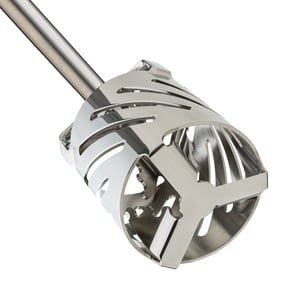
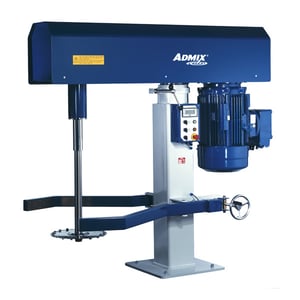
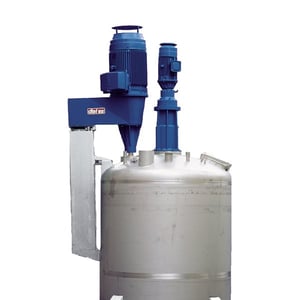
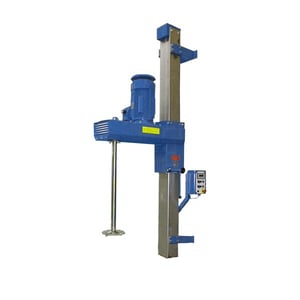
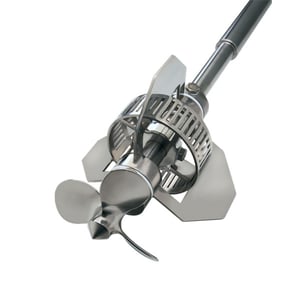
A practical solution is to match the process to the problem: use controlled addition, strong turnover, and localized shear where it matters most. High shear mixing and inline mixer recirculation can improve wet-out and uniformity, while powder induction helps reduce dusting and clumps during powders into liquids.
-
All
-
High Shear
-
In-tank
-
Dispersion
-
In-Tank
Chemical Customers